
…. As we have seen from Harold’s own reflections, the climate of prayer is foreign to many, if not most, in our contemporary culture. The raison d’être for Shepherds Law stands, then, as a counter-cultural statement. Indeed the difficulty in attracting others to such a pattern of prayer is a sign itself of the prophetic nature of the hermitage. Having said that, Harold’s vocation stands foursquare within an ecclesial vision. Both the ecumenical commitment and Harold’s own journey are indications of just this.
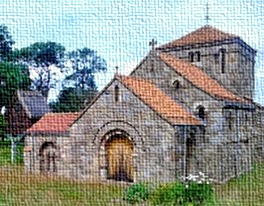
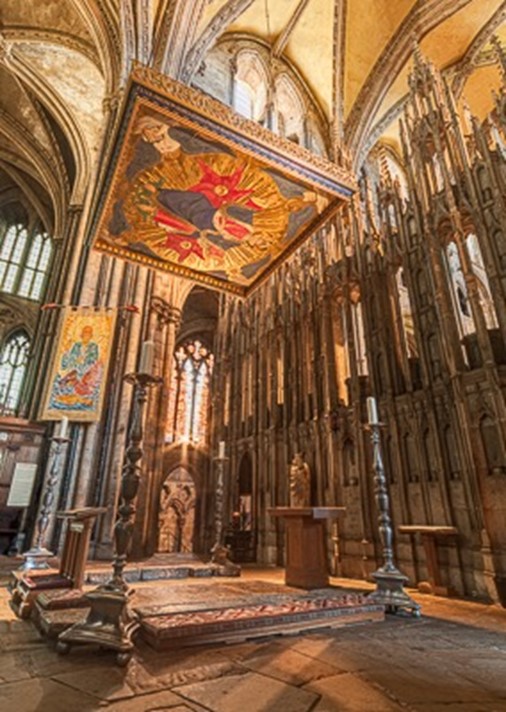
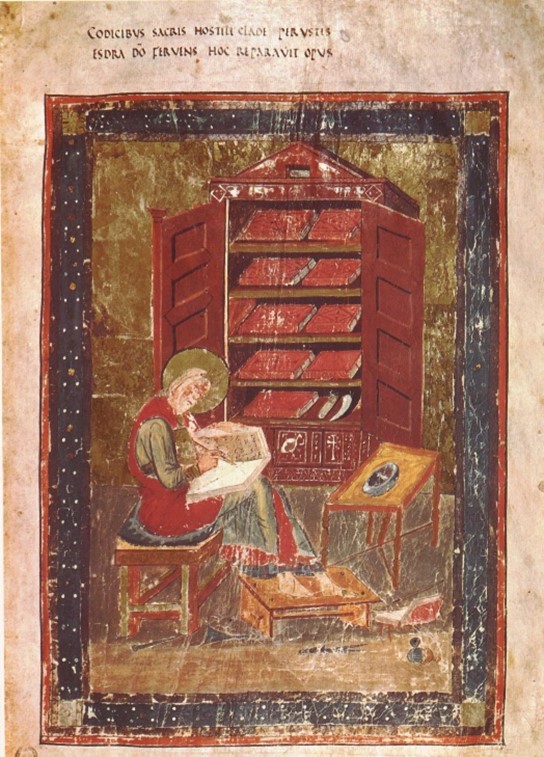
However, the local or contextual is also crucial. Northumberland and Durham have nurtured the local traditions honouring Aidan, Cuthbert, Oswald, Wilfrid, and others. Youth pilgrimages have been part of this tradition. Successive Lambeth Conferences have frequently included gatherings on Holy Island. In a symbolic way, people of a variety of traditions gathered on March 20th 1987, at the tiny chapel on Inner Farne, the earliest predecessors of which had been set up there by St Cuthbert who had died on that same day 1300 years earlier. The traditions of the ‘double monastery’ at Jarrow-Wearmouth, where Bede was a monk, and where he wrote his celebrated Ecclesiastical History of England, the earliest such history, have also been formative. One copy of the Bible commissioned by Abbot Coelfrith survives as the Codex Amiatinus in the Laurentian library in Florence.
The fusion of the sixth/seventh-century Irish and Roman missions to England following the Synod of Whitby made St Cuthbert’s shrine in Durham Northumbria effectively the ‘cradle of English Christianity’. The missionary journeys of Aidan from Iona and Paulinus from Rome remain seminal in understanding Northumbrian Christianity. This fused tradition would be taken by Alcuin of York into mainland Europe via the court of Charlemagne. All of this remains strong in the northern memory, and gives a fundamental foundation to Shepherds Law’s identity. We have already touched on the seminal nature of William of Glasshampton’s work, not only in relation to Harold but more widely, albeit that Harold is perhaps his most important living disciple. The skete-like nature of Shepherds Law also is a witness to an ancient tradition reaching back to the Desert Fathers and the sketes in the west of Ireland, another link with the traditions of Iona.
The skete, then, as seen on Mount Athos, is a different excrescence of the monastic life in small, often remote, houses. The pattern established at Shepherds Law offers a rich variety of points of departure in relation to the liturgical, monastic, cultural and musical traditions of the Christian church. By its radical approach, using that word in its literal sense, it points forward to new possibilities, but rooted in the tradition, in a world which often appears to have lost the capacity or, at least, motivation for prayer and contemplation.
(An extract from Oneness: the Dynamics of Monasticism, ed. S.Platten, Canterbury Press 2017, Chapter 4 by Stephen Platten, © The Contributors 2017)

